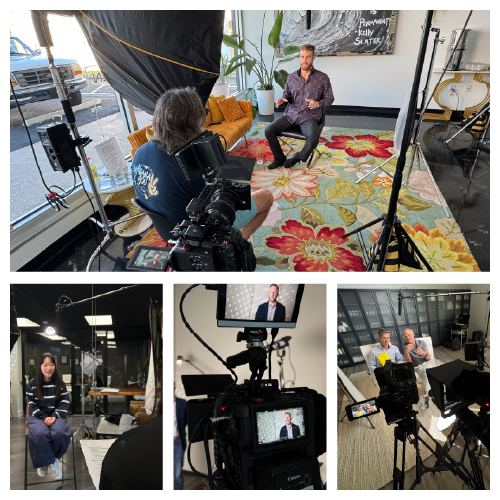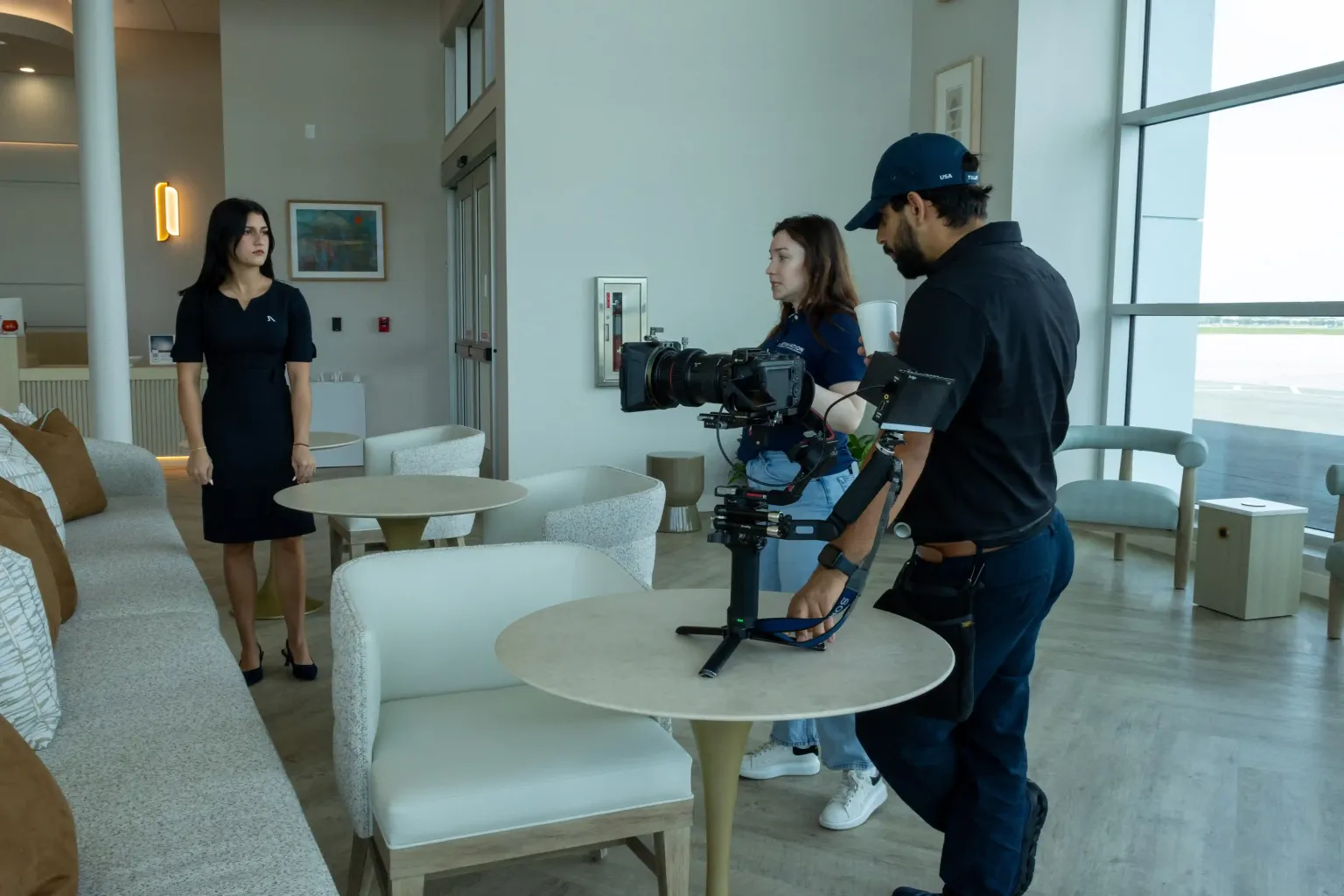


The main types of video production for businesses are corporate and brand videos, commercials, customer testimonials, event coverage, short-form social content, recruitment videos, explainers, product demonstrations, and training videos. The right choice depends less on what looks impressive and more on the business problem the video needs to solve.
One of the most common mistakes I see is expecting a single video to handle every objective. A testimonial can build trust, but it is not designed to train employees. A recruitment video can introduce your workplace culture, but it may not be the right asset for launching a new product.
In this guide, I’ll explain what each business video type is designed to accomplish, where it should be used, and how to choose the right format based on your audience, distribution channel, and goal.
1. Corporate & Brand Videos
A company overview video primarily explains the organization, while a brand film places more emphasis on its values, personality, mission, or emotional story. Many productions combine elements of both.
Corporate brand film produced by Eman Films for Iron Life Gym, created to showcase the gym’s environment, culture, and training experience.
These videos work well as a homepage centerpiece, sales presentation opener, or introductory LinkedIn asset, and are effective for businesses that rely on trust, relationships, or community reputation.
Best for:
- Healthcare providers
- Law firms
- Construction companies
- Family-owned businesses
- Professional service firms
- Nonprofit organizations
One thing I always encourage clients to do is spend less time memorizing scripts and more time telling their story naturally. The most memorable moments almost always happen between prepared answers. Those authentic conversations help viewers connect with your business in a way polished marketing copy never can.
Another mistake I see is trying to fit every message into a single corporate video. Build the production plan around multiple deliverables so leadership interviews, employee stories, customer interactions, and supporting footage can be captured during the same shoot.
2. Commercial & Promotional Videos
A commercial is designed to promote something specific, such as a product, service, campaign, or limited-time offer, within a short window of attention. Unlike a brand video, it doesn’t try to explain your whole company. It’s trying to capture attention quickly, communicate a clear message, and encourage viewers to take action like scheduling a consultation, making a purchase, or learning more about your services.
Commercial video produced by Eman Films for the YMCA, created to promote its programs, community impact, and member experience.
Commercial videos are no longer limited to television. They are created for social media, websites, and digital advertising campaigns. This format works particularly well for:
- Product launch
- Seasonal promotion
- Brand awareness campaign
- Digital advertising
- Television commercials
It leans harder on pacing, a clear hook in the first few seconds, and a specific call to action at the end.
A common issue is beginning production before the campaign objective has been clearly defined. I will always ask my clients to have a clear vision for the video. It helps us make creative decisions and keep the cost in check. If you don’t have clarity and plan changes abruptly, the cost will climb quickly, leading to unnecessary spending that could be avoided.
3. Customer Testimonial Videos
A testimonial lets a real client tell your story instead of you telling it. It can be one of the most efficient formats for building trust because the message comes directly from a real customer. Real people sharing their experiences in their own voices carry more weight than your marketing ever can. Testimonial videos can answer many of the questions potential customers have while adding authenticity. Customer testimonials are especially useful for:
- Medical practices
- Law firms
- Contractors
- Home service companies
- Financial professionals
- B2B service providers
A testimonial focuses primarily on the customer’s experience and opinion. A case study goes deeper by showing the original challenge, the solution provided, and the resulting outcome. Case studies usually require more planning but can provide stronger proof for complex or higher-value services.
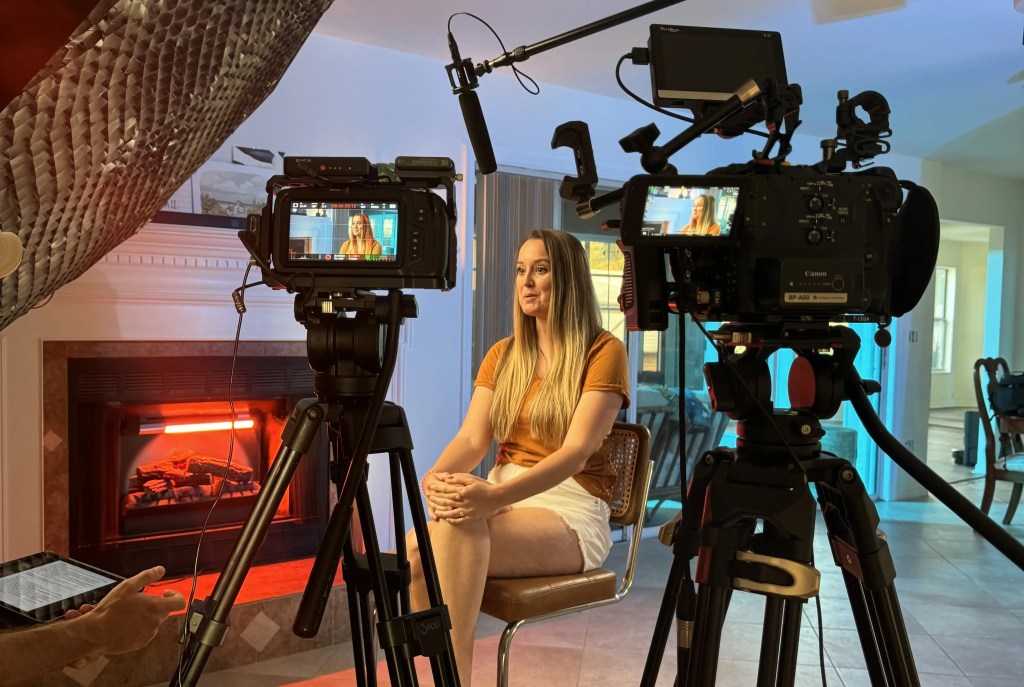
The best testimonials don’t begin with “Tell us why you like working with us.” Instead, we start by asking clients about the challenges they faced before they found your business. That simple shift transforms a testimonial into a story that potential customers can relate to.
The best customer testimonials feel conversational, not promotional. Testimonial videos can be particularly valuable on service pages, landing pages, and proposal follow-ups where prospective customers are evaluating credibility. They reduce uncertainty and reinforce trust at a critical stage of the buyer’s journey.
4. Event Coverage Videos
Event highlight video produced by Eman Films for the Orlando Tech Community, capturing key moments, speakers, networking, and the event atmosphere.
Business events create valuable opportunities that shouldn’t disappear once the event ends.
Whether you’re hosting a conference, corporate meeting, product launch, fundraising gala, networking event, or industry trade show, professional event video production allows you to extend the value of that investment long after attendees go home.
A well-planned production day can generate an event recap for future promotion, social highlight reels, speaker clips, attendee interviews, testimonials, sponsor content, and reusable B-roll footage.
Multi-camera coverage matters more here than in almost any other format, since you’re capturing a live moment once with no reshoots. Large venues throughout Orlando and across Florida may also benefit from aerial footage where the location, venue policies, weather conditions, and applicable flight requirements allow it.
One thing I always do in event production is plan before the first guest arrives. We build detailed production schedules, coordinate with event organizers, identify key speakers, plan camera positions, and much more. That preparation allows our crew to focus on capturing genuine moments.
5. Social Media & Short-Form Content
Short-form video has changed the way businesses communicate with their audiences. Instead of relying on a single polished marketing video each year, companies can consistently stay in front of customers with content tailored for platforms like Instagram, Facebook, LinkedIn, TikTok, and YouTube Shorts.
Social media videos work for every stage of the sales funnel. This business video type is best for:
- Building brand awareness
- Educating potential customers
- Sharing company updates
- Highlighting projects or services
- Driving engagement across social platforms
- Supporting paid social campaigns
The goal is not always to make an immediate sale; it’s to stay relevant and build familiarity over time.
You can experiment with different styles and topics while learning what resonates with your audience. One month, you might answer frequently asked questions and product explainer/demo videos, while the next focuses on customer success stories, industry insights, or quick tips.
Short-form content should be planned around the platform where it will appear. That may involve vertical framing, caption-friendly compositions, faster openings, multiple hooks, shorter edits, and platform-specific calls to action. These requirements should be considered during filming rather than added as an afterthought during editing.
With years of experience, I have learned never to treat social media video production as an afterthought. We plan short-form content before production begins, so every interview, project, and location gives us opportunities to create vertical videos alongside the primary deliverables. It turns one filming day into months’ worth of content, delivering value long after the main video is published.
6. Recruitment Videos
During recruitment productions, we normally prioritize employee interviews, natural workplace interactions, leadership messages, and footage of the actual environment. Candidates are more likely to understand the culture when they can see how people communicate and work rather than only hearing a list of benefits.
Recruitment videos attract potential applicants. Employer-brand videos communicate the company’s broader reputation as a workplace. One production can often support both goals.
Best for:
- Healthcare organizations
- Manufacturing companies
- Hospitality businesses
- Construction firms
- Corporate offices
- Tech firms
- Growing organizations
Instead of listing benefits on a careers page, recruitment videos show real employees, real workplaces, and real experiences. That transparency often attracts stronger applicants while reducing mismatched expectations during the hiring process.
7. Explainer & Product Videos
An explainer video focuses on helping the viewer understand an idea, process, or service. A product demonstration focuses more specifically on showing how a product works, what it does, and how someone uses it. Explainers may use interviews, animation, motion graphics, screen recordings, or live-action footage, while product videos often rely more heavily on demonstrations and close-up visuals.
Product video produced by Eman Films for Beekman 1802, showcasing the Milk Rx Serum and its key features through clear, visually focused storytelling.
These videos are particularly useful for industries such as:
- Software and technology
- Medical and healthcare
- Manufacturers
- Ecommerce businesses
- Professional services firms
- Businesses introducing new products or services
Unlike commercials, which are designed to capture attention and generate interest, explainer and product videos focus on helping customers understand what you offer. That added clarity can reduce hesitation, answer common questions, and make it easier for prospects to move forward with confidence.
8. Training & Internal Communication Videos
Training and internal communication videos help companies deliver consistent information to employees, teams, franchisees, or stakeholders. They can support onboarding, safety procedures, software training, policy updates, leadership messages, and recurring operational processes.
These videos are especially useful for:
- Organizations with multiple locations
- Growing teams
- Healthcare and manufacturing companies
- Franchise operations
- Businesses with repeat training requirements
- Companies introducing new systems or procedures
Unlike recruitment videos, which are designed to attract candidates, training videos support people after they join the organization. A well-planned training library can reduce repeated explanations and give employees access to consistent information whenever they need it.
Match Your Business Goal With the Right Video
- Introduce your company: Use a corporate or brand video on your homepage, sales presentations, and LinkedIn. Focus on brand awareness and engagement.
- Promote an offer: Use a commercial or promotional video for paid ads, landing pages, and television. Measure leads, sales, and conversions.
- Build credibility: Use a testimonial or case study video on service pages, proposals, and sales emails. Track conversion rate.
- Extend an event’s value: Use an event coverage video across social media, event pages, and sponsor outreach. Measure views and event registrations.
- Maintain online visibility: Use short-form social videos on Instagram, TikTok, LinkedIn, and YouTube. Focus on reach and engagement.
- Attract candidates: Use a recruitment video on your careers page, LinkedIn, and job listings. Measure qualified applications.
- Explain a product or service: Use an explainer or product video on product pages, sales presentations, and YouTube. Focus on understanding and inquiries.
- Train employees: Use a training video in learning portals, intranets, and onboarding programs. Measure completion and retention.
How to Choose the Right Video Production for Your Business
- Define one primary objective: Decide whether the priority is awareness, trust, education, sales, recruitment, training, or event promotion.
- Identify the audience: A first-time prospect needs a different message from an existing customer, employee, investor, or job candidate.
- Choose the distribution channel: A homepage brand film, a LinkedIn campaign, a paid social advertisement, a sales presentation, and an employee portal require different formats.
- Define the desired action: Decide what viewers should do after watching: book a call, purchase, apply, register, understand a process, or share the content.
- Plan the deliverables before filming: Determine whether the footage should also be used to create vertical clips, shorter advertisements, interview edits, photography, or future campaign assets.
At Eman Films, we use these same questions to guide every Orlando video production project before filming begins. Your first video does not need to solve every communication problem. It should solve the most important one while being planned carefully enough to support additional content.
Related: The Cost of Corporate Video Production in Florida
Start With the Business Goal, Not the Video Format
The right business video is the one designed for a clearly defined audience, objective, and distribution channel.
A brand video can introduce your company. A testimonial can reduce uncertainty. A commercial can promote an offer. An explainer can simplify a complicated service. Recruitment and training videos can support different stages of the employee journey.
The most valuable production plans also look beyond one finished video. By identifying the required formats, channels, and deliverables before filming begins, one production day can support your website, sales process, recruitment efforts, advertising, and social content for months after the main video is delivered.
Want More Value From Your Next Production Day?
A well-planned shoot can produce more than one finished video. Eman Films can help you plan the primary production and support interviews, social cutdowns, testimonial clips, B-roll, and campaign assets aligned with your business goals.