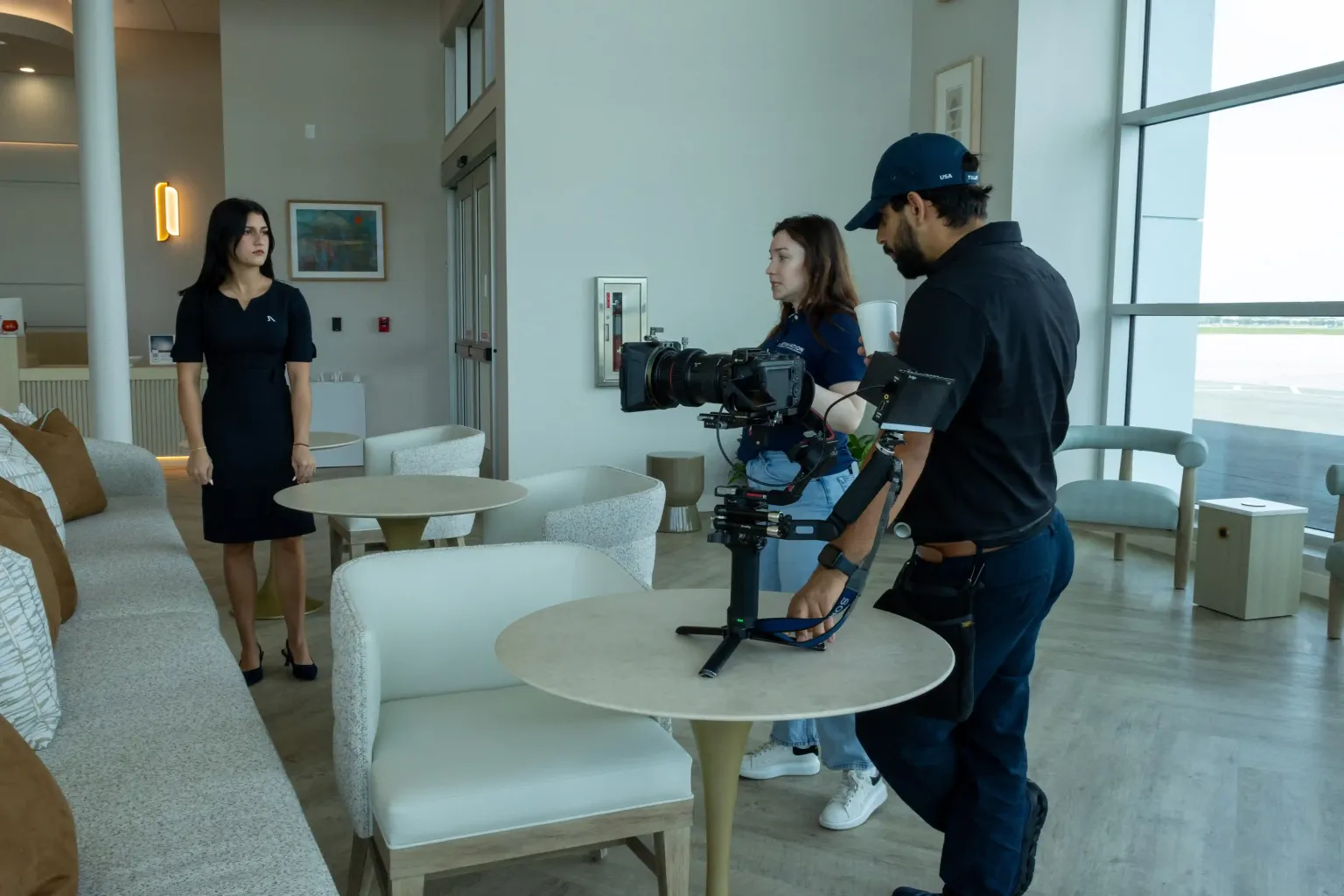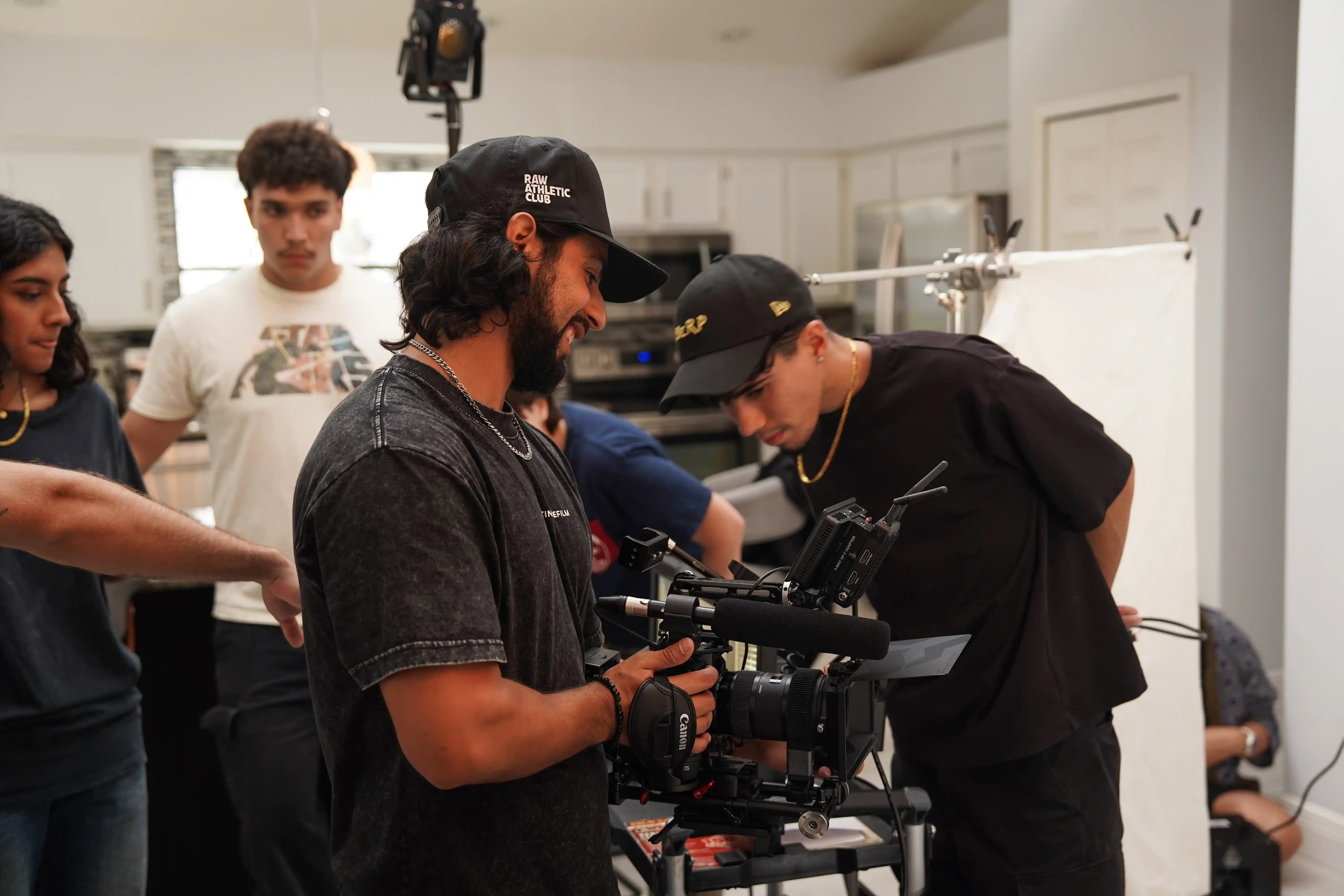
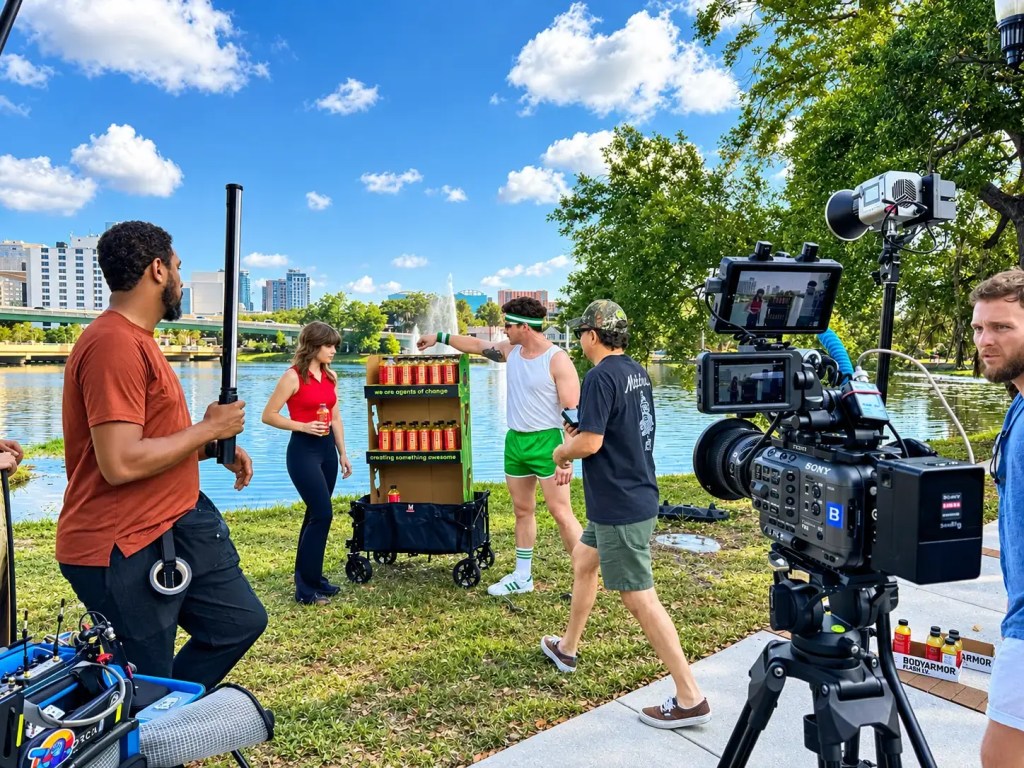

The location is booked. The crew is loading the vans, talent is in hair and makeup, and the cameras are ready for the first shot. Then someone asks, “Did we get the filming permit?”
If the answer is no, the shoot can stop before it starts. The client loses the day, the crew and gear are already booked, and the schedule falls apart. The permit itself is rarely the problem, because in most of the Orlando area it is free. The real risks are applying too late and applying to the wrong jurisdiction.
We film across Orlando and Central Florida, so permits are part of how we plan any shoot that touches public property. This guide covers when you need an Orlando film permit, what it costs, how long it takes, and who to contact, so a paperwork gap does not turn into a lost production day.
Commercial filming on public property in the Orlando area generally requires a film permit, but requirements vary by jurisdiction. For most locations, apply through the Orlando Film Commission at least 5 business days before your shoot, and longer in some cities. The permit is free in the City of Orlando and unincorporated Orange County, although city or county services can add separate costs. You also need general liability insurance of $1,000,000 per occurrence, with the city or county named as additional insured. Extra costs come from off-duty officers, traffic control, metered parking, public works, and some park fees.
Do You Need a Film Permit in Orlando?
If it is a commercial production and you are filming on public property, plan on needing a permit.
You’ll need one if your shoot involves:
- Streets, sidewalks, or public parks
- Lighting, staging, or equipment set up in a public space
- Tents or other temporary structures
- Blocking pedestrian or vehicle traffic
- Special effects, stunts, or pyrotechnics
- Police, fire, public works, or other city or county services
Drones need their own approvals in addition to any film permit. We cover those further down.
You may not need one if:
Unincorporated Orange County has one narrow exemption. You may not need a permit if your total cast and crew is 3 people or fewer and you are using handheld cameras only. Both conditions must apply, and the Film Commission notes that the exemption may still depend on the project’s content.
That exemption does not carry over to other jurisdictions. In Seminole County, a three-person handheld shoot still needs a permit.
A professional crew does not automatically mean you need a permit either. An interview with some B-roll filmed inside a private office in the City of Orlando, with no temporary structures, may not require a film permit at all. The permit process mostly applies when commercial production or event coverage moves onto public property.
What About Private Property?
In the City of Orlando, you only need a permit on private property if you put up temporary structures, such as tents or staging. A standard interior shoot inside an office, hotel, conference room, or business does not need a City of Orlando film permit.
Other jurisdictions draw that line differently. Windermere, Kissimmee, and Clermont require a permit for filming on private property, even without temporary structures. Celebration requires a permit for all filming activities. Always check the specific jurisdiction before assuming private property means no paperwork.
Four Permit Myths Worth Clearing Up
- You need a permit even on private property: Not in the City of Orlando, unless you build temporary structures.
- Any three-person handheld shoot is exempt: That exemption only applies in unincorporated Orange County, and it is not guaranteed.
- Permits take two to three weeks: Most Orlando-area jurisdictions require 5 business days’ notice. Several need longer, up to 30 days.
- Orlando film permits cost $350: There is no standard $350 Orlando film permit fee. Most permits are free.
Who Issues Film Permits in Orlando
This is the trap that catches many productions. An address with an Orlando ZIP code is not always inside the City of Orlando. The metro area is a patchwork of cities, towns, and unincorporated county land, and each one has its own rules. A location that shows “Orlando” on Google Maps can fall under a different jurisdiction with different timelines and fees.
Before you lock a location, send the exact address to the Film Commission and confirm which jurisdiction it falls under.
The Orlando Film Commission, a program of the Orlando Economic Partnership, is the main point of contact for film permits across Orange, Seminole, Osceola, and Lake counties. In its last fiscal year, the Commission handled 166 film permits for local jurisdictions. For most locations, you send your application to the Commission, which acts as the liaison with the local jurisdiction and tells you the exact insurance requirements.
A few locations work differently:
- Parks and state roads: If you are filming at a county, city, or state park, or on any state road, email film@orlando.org directly.
- Cities with their own forms: Altamonte Springs, Longwood, Oviedo, St. Cloud, Clermont, and Windermere use their own permit applications.
- Winter Park: Permits go through the city’s own online permit portal.
- Email-first cities: Ocoee, Casselberry, Winter Springs, and Eustis ask you to email film@orlando.org for the application.
- Lake County: Applications for unincorporated Lake County go directly to LakeEvents@lakecountyfl.gov.
What Do You Need to Submit?
Most jurisdictions ask for the same core details:
- Exact filming address: The specific location and the jurisdiction it falls under.
- Shoot dates and rain dates: Include your planned production hours.
- Cast and crew count: Give an accurate number.
- Scene descriptions: Explain what will happen at the location.
- Parking plan: A map showing the filming area and where production vehicles will park.
- Special equipment: Lighting, generators, tents, cranes, or anything beyond handheld gear.
- City or county services needed: Police, traffic control, fire, public works, or parking.
- Certificate of insurance: At least $1,000,000 in general liability coverage per occurrence, with the city or county named as additional insured. The Film Commission confirms the exact requirements for your jurisdiction.
Special effects raise the bar. If your shoot uses squibs, black powder charges, air mortars, or any audible or visible explosion, the application needs a detailed explanation of the effect and a certified special effects technician, with the certificate attached. You also need a $5,000,000 certificate of insurance naming the city or county as additional insured.
Shoots in unincorporated Orange County with more than 100 people also need a General Assembly Permit, which you arrange through film@orlando.org.
The more your shoot affects the surrounding area, the more the permitting office will require.
How Long Does an Orlando Film Permit Take?
Most Orlando-area jurisdictions require at least 5 business days’ notice. That includes the City of Orlando, unincorporated Orange County, Seminole County, and Osceola County. Where the ordinance says business days, count business days back from your shoot date, not calendar days.
Some jurisdictions need much longer. Orange County Parks and the City of Ocoee require 30 days, and Casselberry needs 21 days. Windermere, Oviedo, and St. Cloud need 14 business days, and Oakland asks for two weeks. Maitland and unincorporated Lake County need 10 business days, while Winter Park and Celebration need 7.
Orange County Parks and Ocoee catch people off guard because a 30-day requirement does not match Orlando’s quick permitting reputation. Road closures and traffic changes also need at least 5 business days’ notice, so build those into the same timeline.
If your shoot is tied to a live event, plan the permit timeline alongside your event video coverage plan, so it never becomes the bottleneck on a confirmed date.
How Much Does a Film Permit Cost in Orlando?
Film permits are free in the City of Orlando, unincorporated Orange County, and most other jurisdictions in the region. The Film Commission also doesn’t charge for its permitting help. Permit fees only apply in a handful of places. They range from $25 per permit in St. Cloud and Winter Springs up to a $250 permit fee plus a $500 filming fee in Oakland, and up to $500 per day to film in Winter Park. The city and county breakdown below lists every fee.
That is why the $350 figure circulating online does not hold up. For most productions, the permit fee is the smallest line in the budget.
The Costs That Actually Matter
- Off-duty officers: Officers are generally required for traffic control, pyrotechnics, crowd control, firearms or weapon-type props, and scenes that portray a crime. To cancel officers, give the Film Commission 24 business hours’ notice, or your production may still owe the agreed payment.
- City of Orlando police: OPD officers work extra duty only inside City of Orlando limits. Shoots in unincorporated areas or other cities use that jurisdiction’s law enforcement agency and its rates. OPD’s 2024 extra-duty information sheet listed average rates of about $55 per hour on weekdays and $75 per hour on weekends, with a four-hour minimum per officer and a $2 per hour fee for each police vehicle. OPD’s extra-duty request page adds a 7.65% payroll tax, a 2.35% City administrative fee, and an Off Duty Management fee of 8% or $6 per hour, whichever is greater, all paid before the event. Confirm current rates when booking.
- Florida Highway Patrol: The Film Commission’s permitting page still lists the 2020 FHP rate of $75 per officer, per hour, with a four-hour minimum. Confirm the current rate before booking.
- Traffic control: Any road closure or traffic change needs a Maintenance of Traffic plan, enough officers to manage traffic, or both. Traffic engineering departments generally prefer major road closures during off-peak hours, from 7 p.m. to 7 a.m., Sunday through Thursday. Quieter roads are easier to close during the day and for longer periods.
- Parks, parking, and public works: Some public parks charge their own fees. Metered parking and public works support are billed separately.
- Special event permits: If your shoot is also a public event, extra event permits may apply.
These costs shape a permit budget, but they are only one part of the wider cost of video production in Orlando.
Not Sure What Your Shoot Will Trigger?
Before you lock in a location or production date, send us the address and your shoot details. We can help you figure out the jurisdiction, approval requirements, and whether anything could affect your schedule.

Film Permit Rules by City and County
Use this as a planning reference. Insurance requirements vary by jurisdiction, and a free permit can still carry service costs. Fees shown are the permit fees listed by the Film Commission. Where no fee is shown, none is listed.
Orange County
- City of Orlando: 5 business days. Private property needs a permit only for temporary structures. Noise ordinance hours run 10 p.m. to 7 a.m.
- Unincorporated Orange County: 5 business days. Private property needs a permit only for temporary structures. The 3-person handheld exemption applies here, depending on content.
- Orange County Parks: 30 days. Park fees may apply.
- Apopka and Belle Isle: 5 business days. For Apopka, the Film Commission lists no permit requirement for temporary structures on private property. Confirm before relying on it.
- Edgewood: 5 business days. Noise ordinance hours run 9 p.m. to 7 a.m.
- Maitland: 10 business days. $75 per day to film.
- Oakland: Two weeks’ notice. $250 permit fee plus a $500 filming fee (the Film Commission’s fee summary lists it as $500 per day), plus variable town service fees. Confirm with the town before budgeting.
- Ocoee: 30 days. Email film@orlando.org for the application.
- Windermere: 14 business days. $100 per permit. Permit required on private property. May ask for supporting letters.
- Winter Garden: 5 business days. Private property needs a permit only for temporary structures. Noise ordinance hours run 9 p.m. to 6 a.m. No filming in downtown Winter Garden Thursday through Sunday.
- Winter Park: 7 business days. $100 per permit and up to $500 per day to film. Apply through the city’s own portal. Noise ordinance hours run 7:30 p.m. to 7:30 a.m. in residential areas and 10 p.m. to 6 a.m. in commercial areas.
Seminole County
- Unincorporated Seminole County: 5 business days. $75 per permit. Private property needs a permit for temporary structures—no exemption for small crews or handheld cameras.
- Altamonte Springs: 5 business days. $50 per permit. Own application form. Private property needs a permit for temporary structures.
- Casselberry: 21 days. $50 per permit. Email film@orlando.org for the application.
- Lake Mary and Sanford: 5 business days.
- Longwood: 5 business days. Own application form. Private property needs a permit for temporary structures.
- Oviedo: 14 business days. Own application form. City parks need 10 business days and a separate facilities use form.
- Winter Springs: $25 per permit. Email film@orlando.org for the application and timeline.
Osceola County
- Unincorporated Osceola County: 5 business days. Private property needs a permit for temporary structures.
- Kissimmee: 5 business days. Permit required on private property.
- St. Cloud: 14 business days. $25 per permit. Own application form, which must be notarized.
- Celebration: 7 business days. Permit required for all filming. Email film@orlando.org for insurance details.
Lake County
- Unincorporated Lake County: 10 business days. $50 per permit. Send the application and insurance certificate to LakeEvents@lakecountyfl.gov. Private property needs a permit for temporary structures.
- Clermont: 5 business days. Own application form. Permit required on private property.
- Eustis: 5 business days. Email film@orlando.org for the application. Private property needs a permit for temporary structures.
Filming Elsewhere in Florida
Orlando’s rules do not travel with you. Tampa, Miami, and Jacksonville run separate permitting systems with their own timelines and fees. When we film for clients in Tampa, Miami, or Jacksonville, the permit check starts from scratch.
Do You Need a Permit to Fly a Drone in Orlando?
A film permit does not authorize a drone flight. Drone approvals are a separate process, and treating them as one is how productions end up grounded on shoot day.
To fly a drone commercially in the Orlando area, you need:
- An FAA Part 107 Remote Pilot Certificate
- FAA registration for the aircraft
- Remote ID compliance
- FAA airspace authorization when flying in controlled airspace
- Permission from the property owner or park authority where you take off and land
Much of the Orlando region sits inside controlled airspace because of the number of airports nearby. Authorization usually comes through the FAA’s LAANC system, where you can file requests up to 90 days before the flight. Requests within the pre-approved altitudes on the FAA’s facility maps are approved in near real time. Part 107 pilots who need to fly higher, up to 400 feet, can submit a further coordination request through LAANC.
The FAA reviews these manually, and they must be submitted at least 72 hours before the flight. Near airports that are not on LAANC, you request authorization through FAA DroneZone instead, and the FAA asks for those requests at least 60 days before the flight. Each authorization covers a set location, altitude, and time, so make sure every flight on a multi-day shoot is covered.
Walt Disney World and Universal
Walt Disney World has had a permanent federal flight restriction since 2003. It covers a 3-nautical-mile radius centered near the Contemporary Resort, up to 3,000 feet, including Magic Kingdom and parts of Epcot. The FAA classifies it as National Defense Airspace. It applies to drones, and violating it is a federal offense.
The Disney restriction does not extend to Universal Orlando, which sits well outside that radius. Universal’s own property rules still apply, and temporary flight restrictions can be issued around major events, so check for active restrictions before every flight.
Local Drone Rules
Florida law generally preempts local governments from regulating drone operations such as airspace, altitude, flight paths, equipment requirements, and pilot qualifications, although local governments can still regulate certain property-related and unlawful conduct, which is why the City of Orlando repealed its drone ordinance in 2017. That does not mean you can launch anywhere. Parks and property owners still control their own ground.
The City of Orlando’s special events guidance says pilots need the park manager’s permission before flying in a city park. Altamonte Springs asks commercial drone pilots to file their FAA authorization with its Events Management office and may require a separate permit depending on the flight. Confirm take-off and landing permission for every location before you plan the shot.
So if a client asks, “Can we add a quick drone shot?”, treat it as a separate approval, not an add-on.
Local Rules That Catch Crews on Shoot Day
Getting the permit is only half the job. You also have to follow the conditions attached to it.
- Noise ordinance hours: In the City of Orlando, noise ordinance hours run from 10 p.m. to 7 a.m. Winter Garden starts at 9 p.m., and residential Winter Park starts at 7:30 p.m. A night exterior in a Winter Park neighborhood has a much smaller window than it looks on paper.
- Neighbor notices: When filming in a City of Orlando neighborhood, notices must reach surrounding neighbors at least two days before the shoot and cannot be delivered after 7 p.m.
- Winter Garden’s downtown blackout: Downtown Winter Garden does not allow filming Thursday through Sunday. It is a popular location, so check the day of the week before you lock a date.
- Windermere’s letters: Depending on the shoot, Windermere may require a letter notifying affected neighbors, homeowner approval if you film in a private residence, letters from neighbors affected by parking, and a letter confirming the production is not a pornographic film. This is standard in the town’s process.
- Natural areas: Filming activities that could affect natural areas may need state environmental approvals. The Film Commission points productions to the Florida Department of Environmental Protection’s Office of the Ombudsman at (850) 245-2118.
Are There Film Incentives in Orlando?
Productions filming in Orlando may qualify for local cash rebates or Florida sales tax exemptions. Eligibility depends on the type of production, qualifying expenses, and each program’s requirements.
Orange County Film Incentive Program
Orange County offers cash rebates to qualifying productions, funded with $25 million over five years (fiscal years 2026 to 2030) from its tourist development tax. Film and TV projects that spend at least $400,000 locally can earn up to 20% back, capped at $1 million. Commercials that spend at least $250,000 locally can earn up to 10% back, capped at $50,000. Projects must also apply before principal photography, book at least 25 Orange County hotel room nights.
Hire five students or graduates from Orange County film programs, base their production offices or soundstages in Orange County, and show Orange County filming locations favorably on screen. Film and TV projects must also display the Orange County logo in their credits. The 2026 application window is now closed, so check the county’s program page for future application windows. Most brand, corporate, and social video shoots fall well below these spending thresholds.
Florida sales tax exemption
The exemption covers eligible production equipment, set design and construction materials, props, and wardrobe. Commercials qualify, but still photography does not. Hotels, car rentals, and location fees are not exempt. Any production company doing film, television, or sound recording work in Florida may qualify for a 90-day certificate, which can be extended. A Florida company that has operated at a permanent Florida address for 12 consecutive months may qualify for a 12-month certificate and renew it annually for up to five years. Applications go through Film in Florida.
What Happens If You Film Without a Permit
Filming without a required permit can result in the production being stopped or delayed until the necessary approvals are in place.
That alone is expensive. If talent, crew, equipment, transportation, and catering are booked, a lost production day means paying for all of it with no footage to show for it.
It can get worse. Fines are possible depending on the jurisdiction and what you were doing. If someone gets hurt, you are dealing with it without the city’s review of your safety, traffic, and officer plan, which can complicate liability and insurance questions.
The fix is simple. Apply early, give each jurisdiction its full notice period, and sort every requirement before shoot day.
How We Handle Permitting for Clients
Permits are one of the less glamorous parts of video production, which is exactly why we deal with them early.
We verify the jurisdiction before confirming a location. “Looks like Orlando” and “is Orlando” can mean two different timelines and two different fee schedules.
Then we look at what the shoot actually involves. That means how many people are on set, where vehicles will park, whether we affect public space or traffic, and whether city services or a drone are part of the plan.
From there, we file within the required notice window, provide the insurance certificate the jurisdiction asks for, and request officers through the Film Commission when the shoot calls for them.
For many corporate video productions, such as an interview and B-roll inside a client’s office, the permitting overhead may be zero. The process matters most for commercial shoots and event coverage on public property.
Key Contacts
If you are planning a video production around Orlando, these are the contacts worth keeping handy.
- Orlando Film Commission: film@orlando.org, (407) 422-7159, 200 S. Orange Ave., Suite 200, Orlando, FL 32801
- Orlando Film Commissioner: Brooke Hill, reachable through film@orlando.org
- County, city, or state parks and state roads: film@orlando.org
- Orlando Police Department off-duty officers: Request Extra-Duty Employment
- City of Winter Park film permits: Winter Park online permit portal
- Lake County film permits: LakeEvents@lakecountyfl.gov
- Orange County Film Incentive Program: OCFilm@ocfl.net, (407) 836-3456
- Florida entertainment industry sales tax exemption: Film in Florida
- Florida Department of Environmental Protection, Office of the Ombudsman: (850) 245-2118
- Eman Films: contact@emanfilms.com, (321) 285-6041
Ready to Shoot in Orlando?
Permits here are not the obstacle people expect. The rules are published, most permits are free, and the Film Commission is set up to help productions happen. Permitting only becomes a problem when you discover a 30-day requirement or a Thursday-through-Sunday blackout after the location is already booked.
Book a Discovery Call, tell us where and when you want to shoot, and we will tell you what it takes to film there legally.
Last reviewed: September 2026. Requirements, fees, and processing times change as ordinances are updated, so confirm current details with the relevant office before filing. This guide is for planning purposes and is not legal advice.